

At a glance
- Japanese bakeries sort bread into four groups: shokupan, kashi pan (sweet), sōzai pan (savoury) and sando.
- The Japanese word pan comes from the Portuguese pão, bread.
- Fillo bakes four shokupan loaves (₹200 to ₹250), seven anpan (₹169 to ₹199) and three fruit sandos (₹179 to ₹199).
- Fillo also bakes seven strudels, five savoury and two sweet (₹99 to ₹139). These are its own, not a Japanese bread type.
- Everything is eggless and vegetarian. Not vegan: it contains milk, butter and wheat.
- Same-day delivery across Bengaluru in two-hour slots, free within 2 km or over ₹500.
What are the main types of Japanese bread?
Knowing the four groups makes any bakery shelf easier to read.
- Shokupan (食パン) is the everyday loaf: square or domed, fine-crumbed, sold whole or sliced thick.
- Kashi pan (菓子パン) are sweet breads, buns with a sweet filling or topping. Anpan, cream pan and melon pan are kashi pan.
- Sōzai pan (惣菜パン) are savoury breads, buns filled or topped with something you would otherwise eat as a meal. Karepan and yakisoba pan are the best known.
- Sando (サンド) is a sandwich, nearly always on shokupan with the crusts cut off. Katsu, egg and fruit are the classics.
Here is the whole shelf in one table.
| Bread | Japanese | Sweet or savoury | What it is | Does Fillo bake it? |
|---|---|---|---|---|
| Shokupan | 食パン | Lightly sweet | Square milk loaf, fine soft crumb | Yes: the Milk Shokupan and three more |
| Flavoured shokupan | マーブル食パン etc. | Sweet | Shokupan with chocolate, swirls or colour | Yes: Marble, Chocolate and Blue Pea |
| "Hokkaido milk bread" | — | Lightly sweet | A name used outside Japan for shokupan-style loaves | Our Milk Shokupan is this style of loaf, eggless |
| Anpan | あんパン | Sweet | Soft bun with a sweet filling sealed inside | Yes: seven, cream-filled rather than red bean |
| Cream pan | クリームパン | Sweet | Soft bun filled with custard cream | Closest: the Custard Anpan |
| Melon pan | メロンパン | Sweet | Bun under a crisp cookie-dough crust | No |
| Shio pan | 塩パン | Savoury-leaning | Buttery rolled bun, crisp underneath | No |
| Koppepan | コッペパン | Plain | Soft oblong roll, split and filled | No |
| Karepan | カレーパン | Savoury | Curry-filled bun, usually fried | Not on our menu |
| Yakisoba pan | 焼きそばパン | Savoury | Koppepan filled with fried noodles | No |
| Katsu sando | カツサンド | Savoury | Breaded cutlet sandwich on shokupan | No (we are vegetarian) |
| Tamago sando | たまごサンド | Savoury | Egg salad sandwich on shokupan | No (we are eggless) |
| Fruit sando | フルーツサンド | Sweet | Shokupan, whipped cream and fruit | Yes: three, starting with the Fruit Sando |
Where did Japanese bread come from?
From two arrivals, three centuries apart. Portuguese traders reached Japan in the mid-16th century and left the word: pan comes from the Portuguese pão. The bread itself did not stick.
It arrived properly in the Meiji era (1868 to 1912), when Japan was adopting Western food on purpose. The bakery most often named is Kimuraya, which began in Tokyo in 1869 and took that name when it moved to Ginza in 1874. Its bakers adapted yeasted dough to local taste, most famously by sealing sweet bean paste inside it.
The soft white loaf became everyday food after the Second World War, during the Occupation, when imported wheat and powdered milk were cheap. Japanese bakers spent the following decades refining it into the shokupan sold today.
What are the Japanese loaves?
Shokupan (食パン)
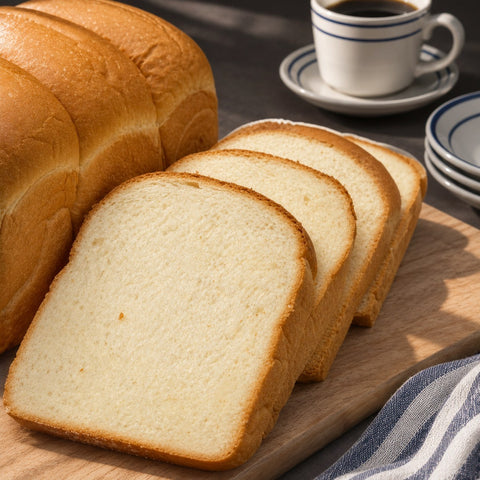
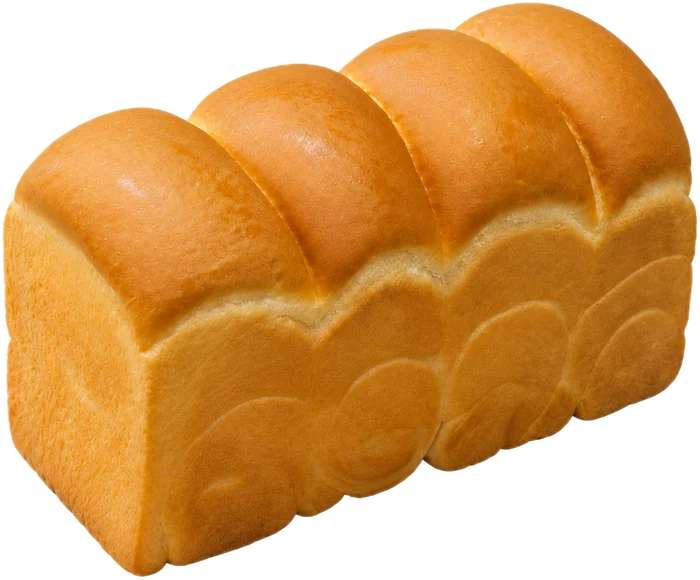
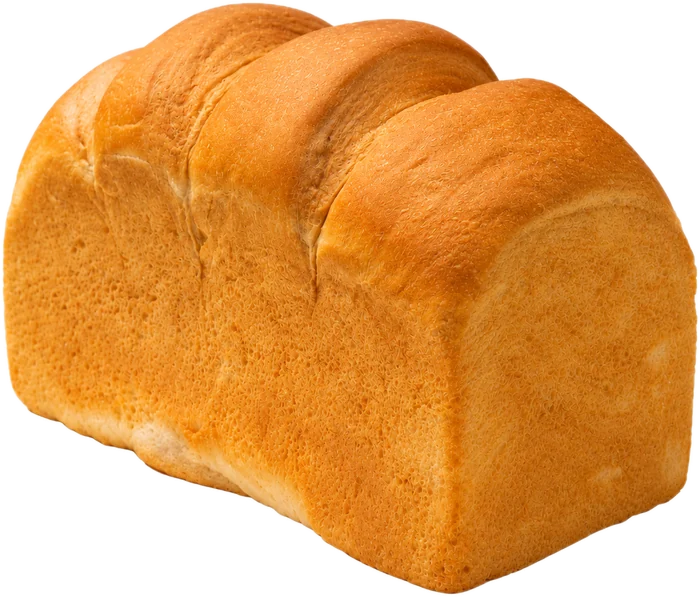
Shokupan (食パン) is Japan's everyday loaf, and the name means roughly "eating bread". It is tall, usually baked in a lidded Pullman tin for a square slice, with a thin crust and a fine, even crumb that pulls apart in soft sheets rather than crumbling. Milk, a little sugar and fat, and time make it soft.
Fillo's Milk Shokupan, ₹200, is the loaf the bakery started with, and the one that took longest to get right without eggs. The full story is in what is shokupan, and whether the loaf normally has egg in it is in is shokupan eggless.
"Tear it, don't slice it. It gives up in soft sheets." — Fillo Bakes
Flavoured shokupan
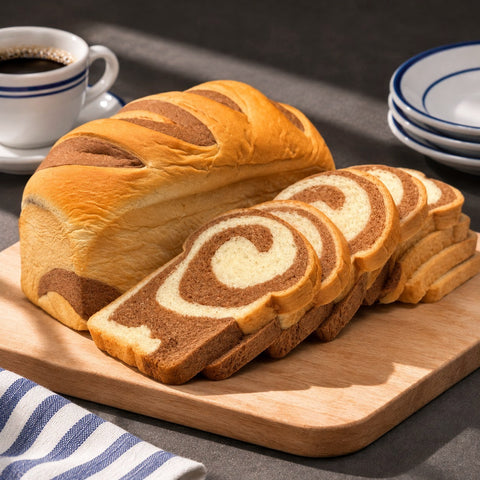
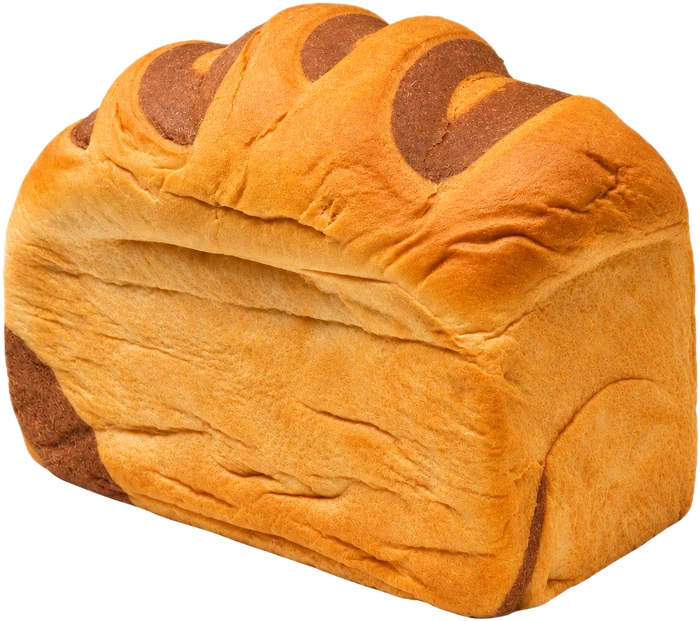
Once the plain loaf is right, bakeries vary it. Marble shokupan (マーブル食パン) is shokupan with a chocolate dough folded through, so every slice shows a swirl. Chocolate shokupan is dark right through. Others are coloured with matcha or flowers.
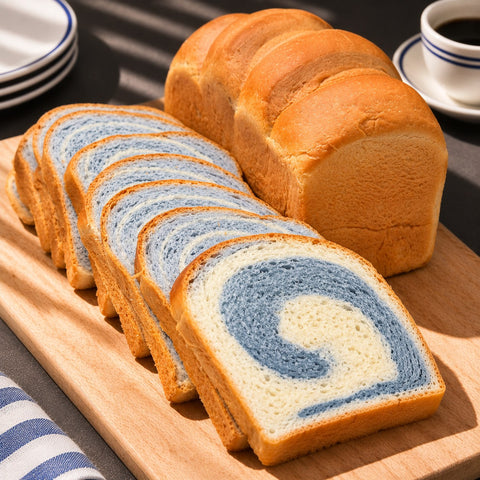
Fillo bakes three: the Marble Shokupan (₹200), the Chocolate Shokupan (₹250) and the Blue Pea Shokupan (₹250), coloured with butterfly pea flower and no artificial colour. Which of the two chocolate loaves to pick is in marble vs chocolate shokupan.
"Hokkaido milk bread"
This is a name, not a different bread. Outside Japan, a soft shokupan-style loaf made with milk is often sold as Hokkaido milk bread, a nod to Japan's main dairy region. In Japan the same loaf is simply shokupan.
One difference is worth knowing. Recipes published under the Hokkaido name very often include egg. We call ours Milk Shokupan and make no claim about where the milk comes from.
What are the Japanese sweet breads?
Anpan (あんパン)
Anpan (あんパン) is a soft bun with sweet red bean paste sealed inside, and it is where kashi pan began. Kimuraya made it in the 1870s and presented a version topped with a salt-pickled cherry blossom to Emperor Meiji in 1875. It is still a staple of Japanese bakeries.
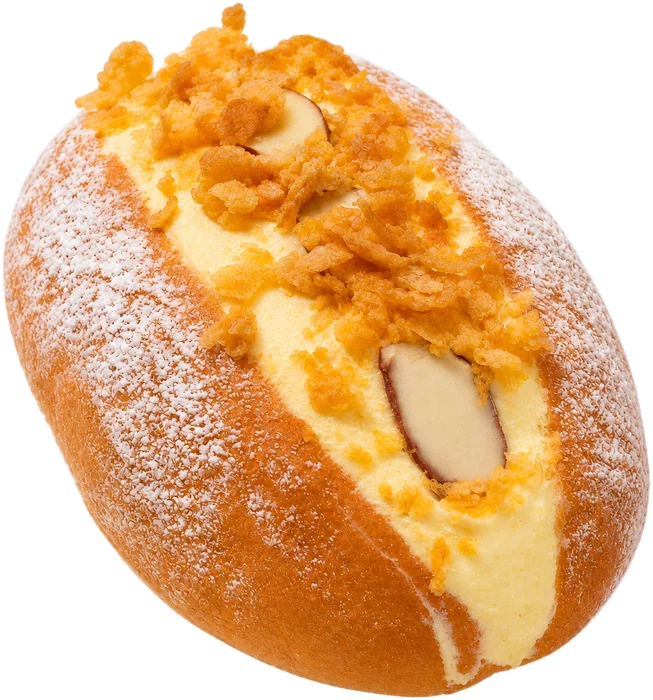
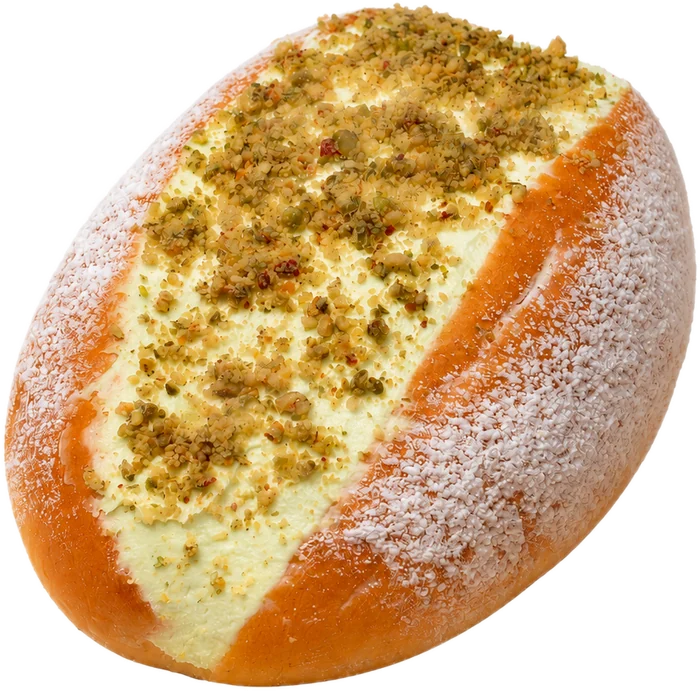
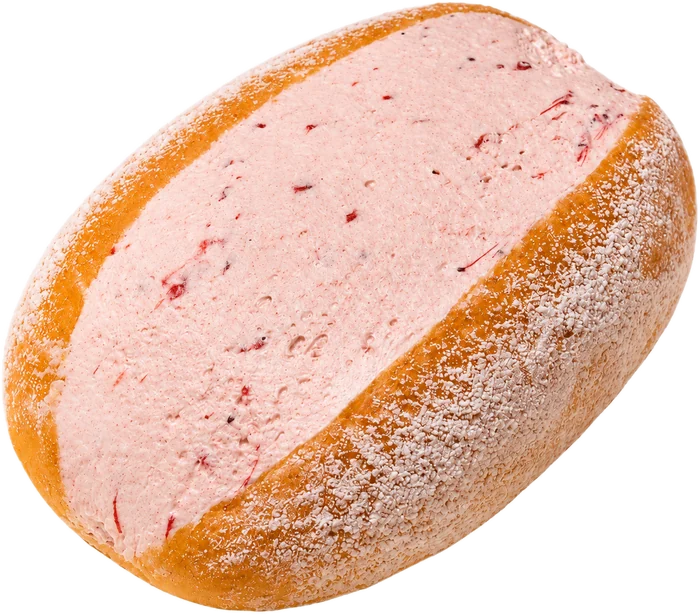
Fillo's seven anpan are eggless and filled with cream rather than red bean, a departure we would rather name than hide. They run from ₹169 to ₹199: Custard, Choco-la, Pistachio, Strawberry Cream, Tiramisu, Cookie n Cream and Banana Biscoff. The history is in what is anpan, and which one to start with is in the best anpan to try first.
Cream pan (クリームパン)
Cream pan (クリームパン) is a soft bun filled with custard cream, often shaped like a mitten. It is credited to Nakamuraya, a Tokyo bakery, in 1904: the anpan format with custard in place of bean paste. By Japanese naming, Fillo's Custard Anpan, ₹169, is closer to a cream pan than to a classic anpan. Milk bun, eggless custard cream, nothing else competing.
Melon pan (メロンパン)
Melon pan (メロンパン) is a round sweet bun under a thin layer of cookie dough, scored in a grid so the top bakes into a crisp, sugary shell. It does not traditionally taste of melon; the name comes from the crust looking like a melon's rind. Its origin is disputed, with several competing stories. Fillo does not bake melon pan.
What are the Japanese savoury breads?
Shio pan (塩パン)
Shio pan (塩パン) is salt bread: a small rolled bun with butter wrapped inside. In the oven the butter melts and steams, leaving a crisp, buttery base and a hollow middle. It comes from Ehime prefecture and was popularised by Pain Maison, a bakery there, before being copied across Japan and Asia. Fillo does not bake it.
Karepan (カレーパン)
Karepan (カレーパン), also written kare pan or curry pan, is a bun wrapped around thick Japanese curry and usually deep-fried, so the outside is crisp and the inside soft. Cattlea, a bakery in Tokyo's Morishita, says it first sold one in 1927 as yōshoku pan, "Western food bread". Karepan is not on our menu. If it is the curry you are after, see the Kyoto Curry strudel below, and Japanese curry vs Indian curry for why it tastes milder.
Yakisoba pan (焼きそばパン)
Yakisoba pan (焼きそばパン) is a koppepan, a soft oblong roll like a hot dog bun, split and filled with stir-fried noodles in a sweet, tangy sauce, sometimes with red pickled ginger. Carbohydrate in carbohydrate, the way a vada pav is. Fillo does not bake it.
What are Japanese sandos?
A sando (サンド) is a Japanese sandwich, nearly always on crustless shokupan. The bread is soft enough to bite through cleanly and strong enough to hold a wet filling.
Katsu sando (カツサンド)
Katsu sando (カツサンド) is a breaded, fried pork cutlet in tonkatsu sauce between two slices of shokupan. It is usually traced to Isen, a tonkatsu restaurant in Tokyo's Ueno. We bake vegetarian only, so no katsu sando, but the sauce turns up in our Calcutta Blaze strudel.
Tamago sando (たまごサンド)
Tamago sando (たまごサンド) is an egg salad sandwich on shokupan, boiled egg and mayonnaise, and a convenience-store staple in Japan. Fillo is eggless, so we do not make it.
Fruit sando (フルーツサンド)
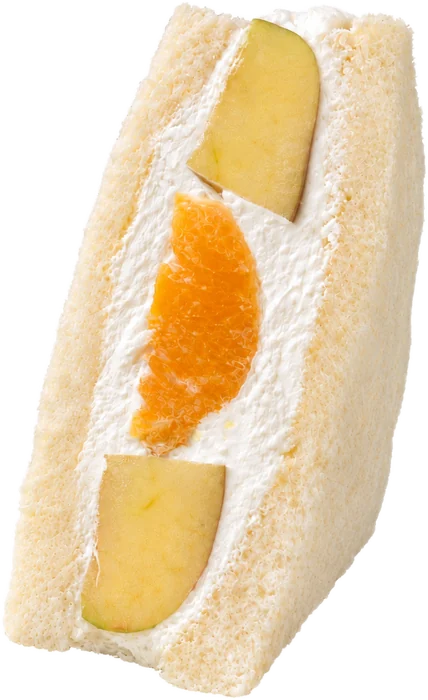
Fruit sando (フルーツサンド) is crustless shokupan with lightly sweetened cream and fresh fruit, arranged so the fruit shows in the cut face. It grew out of Japan's fruit parlours in the early 20th century, though nobody agrees on who made the first.
Fillo makes three on its Milk Shokupan, all eggless, with seasonal fruit: the Fruit Sando (₹179, whipped cream), the Custard Fruit Sando (₹189, custard cream) and the Strawberry Fruit Sando (₹199, strawberry cream). More in what is a fruit sando.
Are Fillo's strudels Japanese?
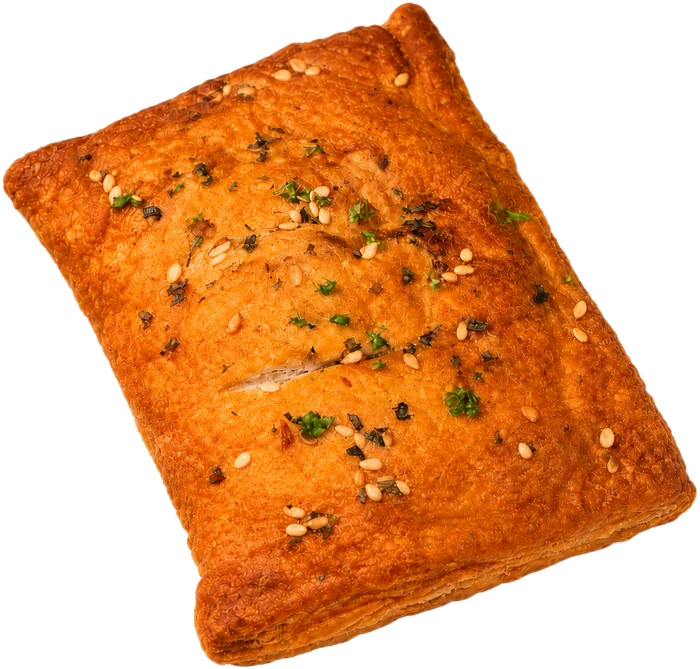
No, and we would rather say so. Strudels are Fillo's own: flaky pastry, each named for a city or a flavour, sitting on the menu beside the Japanese breads. Five are savoury, and two, Orchard Melt and Mawa Melt, are sweet.
| Strudel | What's inside | How it eats | Price | |
|---|---|---|---|---|
| Savoury strudel | Bangalore Bloom | Mixed vegetables and potato, subtly spiced | Gentle enough for a child; the one most people try first | ₹99 |
| Savoury strudel | Kyoto Curry | Japanese-style vegetable curry | Milder and sweeter than Indian curry | ₹129 |
| Savoury strudel | Korean Whisper | Spring onion, cream cheese, garlic | After Korean garlic bread; not remotely subtle | ₹129 |
| Savoury strudel | Calcutta Blaze | Spicy paneer in tonkatsu sauce | The most Indian-tasting of the range | ₹139 |
| Savoury strudel | Umami Melt | Mushroom and cheese | No chilli at all | ₹139 |
| Sweet strudel | Orchard Melt | Spiced apple compote | Crisp outside, soft in the middle | ₹139 |
| Sweet strudel | Mawa Melt | Milky mawa, cardamom, a crumble | Sweet the Indian way; a mithai shop inside a strudel | ₹139 |
The Kyoto Curry is the nearest Fillo gets to karepan in flavour, but it is a baked strudel, not a fried bun. Each one, city by city, is in the city strudels.
Why is Japanese bread so soft?
Mostly the dough and the time it is given. Four things do the work.
- A soft dough. Japanese loaves start wetter than most sandwich breads, and the moisture stays in the crumb.
- Milk and fat. Milk, butter and a little sugar soften the crumb and give it a faint sweetness.
- Time. A slower ferment develops flavour and a fine, even crumb.
- The tin. A lidded tin forces the dough into a square, which keeps the crumb tight and the crust thin.
Many milk-bread recipes, and most enriched Japanese buns, also use egg. Ours do not, which meant finding the softness elsewhere: a wetter dough and a longer, cooler ferment, shaped by hand in small batches. The Japanese word for that softness is in what is fuwa fuwa.
Which Japanese breads does Fillo bake?
Three of the types on this page, all eggless and vegetarian, baked in Bengaluru.
| Type | How many | Price | Start with |
|---|---|---|---|
| Shokupan | Four loaves, whole or sliced | ₹200 to ₹250 | Milk Shokupan |
| Anpan | Seven cream-filled buns | ₹169 to ₹199 | Custard Anpan or Choco-la |
| Fruit sando | Three, seasonal fruit | ₹179 to ₹199 | Fruit Sando |
Then there are the strudels, which are ours rather than Japan's. We do not bake melon pan, shio pan, koppepan, karepan, yakisoba pan, katsu sando or tamago sando. Some contain egg or meat; the rest are simply not on our menu.
Read next
Every Fillo guide, grouped by what it covers.
Breads
- What is shokupan: the Japanese milk loaf, its two shapes, and our eggless one.
- Is shokupan eggless: when shokupan has egg in it, and how to check.
- Shokupan vs white bread vs pav: crumb, crust, sweetness and egg, side by side with brioche too.
- Marble vs chocolate shokupan: swirl or dark right through, and which to pick.
- Blue pea bread: why the Blue Pea Shokupan is blue.
- How to eat shokupan: slicing thick, toasting, sandos.
- How to store shokupan: keeping a loaf soft at home.
Buns
- What is anpan: the bun Kimuraya made for an emperor, and our seven.
- The best anpan to try first: which bun for which person.
Sandos
- What is a fruit sando: shokupan, cream and seasonal fruit, cut to show.
Strudels
- The city strudels: all seven, and the cities behind the names.
- Japanese curry vs Indian curry: why the Kyoto Curry is milder and sweeter.
Culture and words
- Japanese bakery glossary: the words on a Japanese bakery shelf.
- What is fuwa fuwa: the Japanese word for soft and fluffy.
- What is a kissaten: Japan's old coffee houses, where thick toast belongs.
- Why eggless: why Fillo bakes without egg.
Ordering
- Shokupan in Bengaluru: the four loaves, to order.
- How to order: slots, delivery fees and timing.
- Eggless tiffin ideas: lunch boxes built from the menu.
Sources
- Wikipedia, Shokupan: name, ingredients, Pullman-style tin.
- Wikipedia, Anpan: Kimuraya, the 1875 presentation to Emperor Meiji.
- Wikipedia, Glossary of Japanese words of Portuguese origin: pan from pão.
- Japan House Los Angeles, Japanese bread: Portuguese traders, the Meiji era, the post-war loaf.
- Food in Japan, Cream bread: Nakamuraya, 1904.
- Wikipedia, Melonpan: the crust and the disputed origin.
- Wikipedia, Shio pan: Ehime and Pain Maison.
- SoraNews24, Japan's oldest curry bread bakery: Cattlea, 1927.
- Wikipedia, Yakisoba-pan: koppepan and fillings.
- Wikipedia, Katsu sando: Isen in Ueno.
- Wikipedia, Egg sandwich: tamago sando.
- Tasting Table, The history of Japan's fruit sandwich: fruit parlours.
Questions
What is the most common Japanese bread?
Shokupan, the square milk loaf, is the most common bread in Japan. It is the everyday loaf for toast and sandwiches, and the base for sandos.
What is the difference between kashi pan and sōzai pan?
Kashi pan are sweet breads and sōzai pan are savoury ones. Anpan, cream pan and melon pan are kashi pan; karepan and yakisoba pan are sōzai pan.
Where does the Japanese word pan come from?
The Japanese word pan comes from the Portuguese pão, brought by Portuguese traders and missionaries in the 16th century.
Is Japanese bread vegetarian?
Not always. Many Japanese breads use egg in the dough or as a glaze, and some savoury ones contain meat, like katsu sando and many karepan. Everything Fillo bakes is vegetarian and eggless.
Are Fillo's strudels Japanese bread?
No, Fillo's strudels are the bakery's own and not a Japanese bread type. Five strudels, from the ₹99 Bangalore Bloom to the Umami Melt, are savoury; two, Orchard Melt and Mawa Melt, are sweet.
Which Japanese breads can I buy in Bengaluru from Fillo?
Fillo Bakes sells four shokupan loaves, seven cream-filled anpan and three fruit sandos, all eggless, with same-day delivery across Bengaluru. Karepan is not on the menu.