



At a glance:
- Japanese curry is called kare (カレー) and arrived in Japan in the Meiji era (1868–1912), via the British.
- Its texture comes from a roux, usually bought as a block and melted into the pot.
- Indian "curry" is an umbrella word, mostly a British one, for many dishes with their own names.
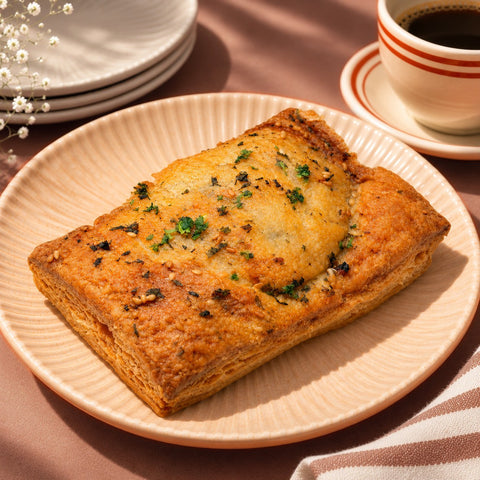
- Fillo Bakes, an eggless Japanese-inspired bakery in Bengaluru, bakes a Japanese curry strudel, the Kyoto Curry, at ₹129.
- Karepan, the Japanese curry bread, is not on our menu.
What is Japanese curry?
Kare (カレー) is the Japanese name for curry: a thick, glossy, brown stew of onion, carrot and potato, usually with beef, pork or chicken, served over short-grain rice. Served that way it is kare raisu (カレーライス), curry rice, which is one of the most common home meals in Japan.
The flavour is gentle: warmth from the curry powder, depth from long-cooked onion, and often a little sweetness from grated apple or honey. Roux is sold as mild, medium and hot, and even hot is mild by most Indian standards. Someone raised on Andhra or Chettinad food will find it comforting rather than exciting, which is rather the point.
How did curry get to Japan?
Through the British, not directly from India. The short version:
- Meiji era (1868–1912). Japan opens to Western trade, and curry arrives with the British, most likely through the Royal Navy and its curry powder. It is treated as Western food, yōshoku (洋食), rather than Asian food.
- 1870s. Curry recipes appear in Japanese cookbooks, and by 1877 it is on the menu of Seiyoken, a Western-style restaurant in Tokyo.
- The navy. The Imperial Japanese Navy adopts curry as a ration, served over rice and thickened with flour. Japan's maritime forces still serve curry, traditionally on Fridays.
- 1905. Curry powder made in Japan brings the price down, and curry moves from restaurants into homes.
- 1950s. Instant curry roux, sold in solid blocks, takes over home cooking.
- 1963. House Foods launches Vermont Curry, a roux made with apple and honey, pitched as a curry children could eat too. House Foods says it is still the best-selling roux brand.
So Japanese curry is a British reading of Indian food, adapted again for rice and the Japanese palate. That is why it tastes like neither.
What is a curry roux block?
A curry roux (カレールー, karē rū) is flour, fat and curry powder cooked together, then set into a solid bar, a little like a large chocolate bar scored into squares. You simmer meat and vegetables in water, turn off the heat, drop in a few squares and stir until the sauce thickens.
The roux does two jobs: it seasons the pot and it thickens it. That thickening is the biggest difference from Indian cooking, where body comes from onion, tomato, yogurt, coconut, nuts or lentils, never a flour paste. Most Japanese households use a block rather than making roux from scratch.
How is Indian curry different?
Indian food does not have one curry. It has rogan josh from Kashmir, sambar from the south, kadhi in Gujarat and Punjab, Bengali jhol, Goan xacuti, and hundreds more, each with its own name. Indians did not call these dishes "curry". The British lumped them together under one word, which most likely comes from the Tamil kari, a spiced dish eaten with rice.
What they share is method more than taste. Whole spices are often tempered in hot oil or ghee to release their flavour, a step called tadka or tempering. Spice blends change by region and by household. Heat ranges from none at all to very hot, and sourness from tamarind, kokum or tomato is common. Thin, pourable gravies are as normal as thick ones.
Japanese curry vs Indian curry: side by side
| Japanese curry (kare) | Indian curries | |
|---|---|---|
| What it is | One dish, cooked much the same way across Japan | Hundreds of regional dishes with their own names |
| How it thickens | Roux of flour, fat and curry powder | Onion, tomato, yogurt, coconut, nuts or lentils; no roux |
| Spice | Pre-blended curry powder in the roux | Whole and ground spices, often tempered in oil or ghee |
| Heat | Mild to medium, even when labelled hot | None to very hot, depending on the dish |
| Sweetness | Often slightly sweet; apple or honey is common | Usually savoury; sweetness in some regional dishes |
| Texture | Thick, glossy, stew-like | Anything from a thin rasam-like broth to a dry fry |
| Served with | Short-grain rice (kare raisu), or inside bread | Rice, roti, dosa, idli, appam and more |
| Home method | A shop-bought roux block | Spices from the masala dabba |
Where does Fillo's Kyoto Curry fit in?
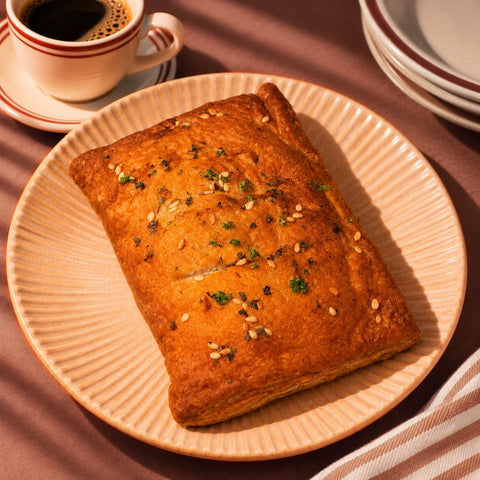
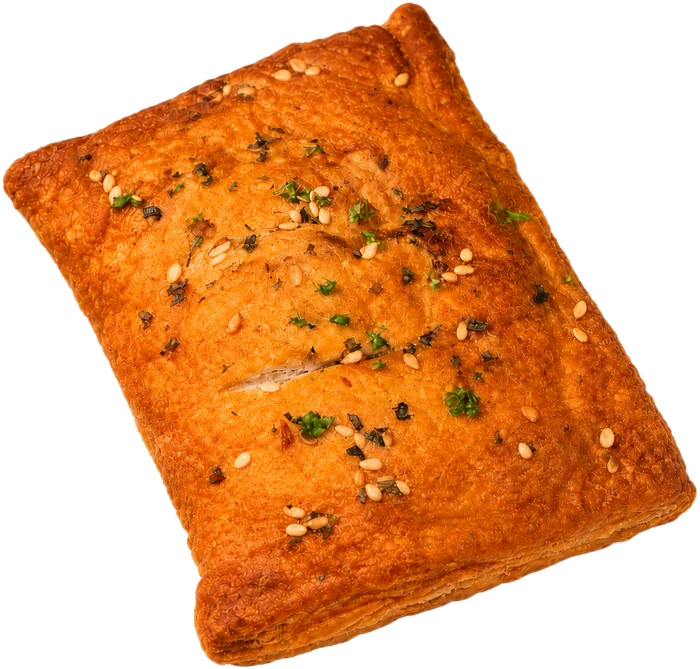
The Kyoto Curry (₹129) is our Japanese curry strudel: vegetables in a smooth curry sauce, folded into golden pastry and baked. Japanese curry is milder and sweeter than the Indian kind, and the pastry keeps it that way. It is marked Mild · Savoury, and it is eggless, like everything we bake. It contains wheat.
It is a good first taste of the Japanese side of the menu. If you want something more Indian-tasting, the Calcutta Blaze (₹139) puts spicy paneer in tonkatsu sauce, the sweet-sharp Japanese brown sauce. The gentlest strudel is the Bangalore Bloom (₹99), mixed vegetables and potato with subtle spices. All seven strudels, and where their names come from, are in the city strudels.
Is karepan on the Fillo menu?
No. Karepan (カレーパン) is Japanese curry bread: a dough wrapped around curry and usually crumbed and fried, a common sight in Japanese bakeries since the late 1920s. It is not on our menu. The Kyoto Curry is a baked strudel, not a karepan. For where karepan sits among Japanese breads, see types of Japanese bread, and for the other words on a Japanese bakery shelf, the Japanese bakery glossary.
Fillo delivers the same day in two-hour slots across Bengaluru. Order about an hour ahead, and delivery is free within 2 km or over ₹500.
Sources
- Japanese curry, Wikipedia
- Curry, Wikipedia
- Tempering (spices), Wikipedia
- Vermont Curry, House Foods
- House Foods Group history
- The history of Japanese curry rice, Tasting Table
Questions
What is the main difference between Japanese and Indian curry?
Japanese curry is thickened with a roux of flour, fat and curry powder, which makes it thick, mild and slightly sweet. Indian curries use no roux. They get their body from onion, tomato, yogurt, coconut or lentils, and their flavour from spices often tempered in oil or ghee.
Why is Japanese curry sweet?
Japanese curry is often sweetened with grated apple, honey or long-cooked onion. House Foods' Vermont Curry, launched in 1963 with apple and honey, made the mild, sweet style the household standard.
Is Japanese curry Indian?
Not directly. Curry reached Japan in the Meiji era through the British, who had adapted Indian dishes into curry powder and stew. Japan then adapted it again, for rice.
What does kare raisu mean?
Kare raisu (カレーライス) means curry rice: Japanese curry served over short-grain rice. It is one of the most common home meals in Japan.
Does Fillo make Japanese curry?
Yes, as a strudel. The Kyoto Curry (₹129) is vegetables in a smooth Japanese-style curry sauce, baked in pastry. It is eggless and mild, and Fillo does not make karepan.
Is Japanese curry spicy?
Not very. Even "hot" Japanese curry roux is mild by most Indian standards, and Fillo's Kyoto Curry is marked Mild · Savoury. For heat, the Calcutta Blaze is the spicier strudel.