

At a glance:
- What it is: Japan's everyday loaf, soft, milky and faintly sweet.
- Eggless: not always in Japan. Always at Fillo, which is 100% eggless and vegetarian.
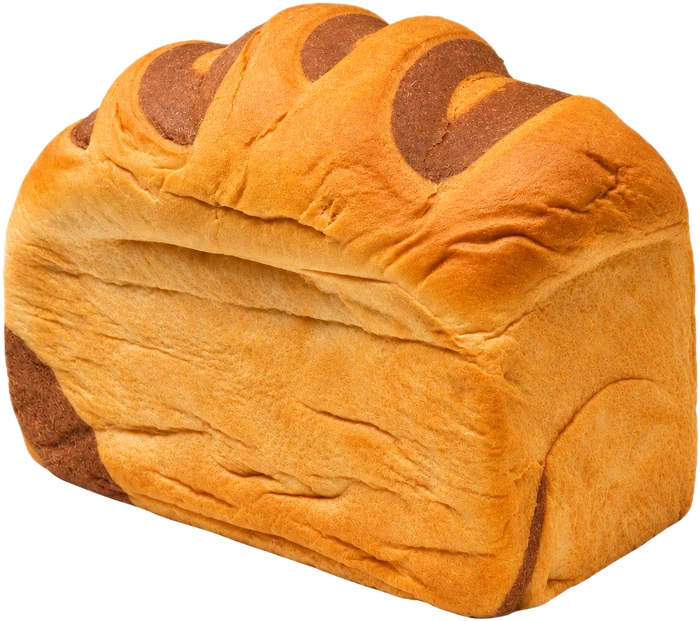
- Fillo's four loaves: Milk, Marble, Chocolate and Blue Pea, ₹200 to ₹250 each.
- Loaf or sliced: either. You choose when you add it to the cart.
- Contains: wheat and dairy. Not vegan.
- Where to get it: fillobakes.com, same-day delivery across Bengaluru.
What does shokupan mean?
It means, roughly, eating bread: the loaf you keep in the house rather than the one you buy for an occasion. In Japan it is the default bread, the way pav or a sliced white loaf is the default here.
The word joins 食 (shoku, food or eating) with パン (pan), the Japanese word for bread, which came from the Portuguese pão in the sixteenth century. The same Portuguese word reached Goa and became pav. Two countries, one word for bread, two very different loaves.
What makes shokupan different from other bread?
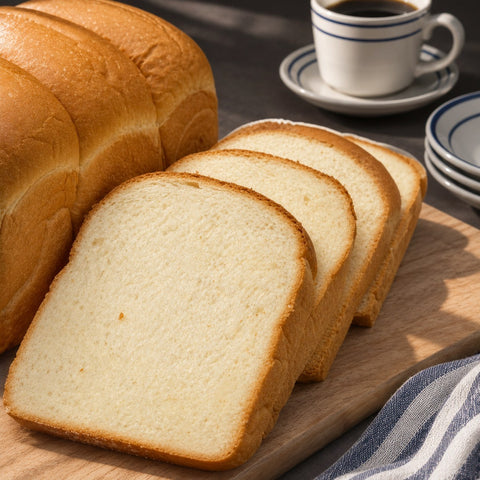
The crumb is fine and even. The crust is thin and pale gold. A slice pulls apart in sheets and holds its shape under butter, jam or a sandwich filling. The dough is enriched, which means it carries milk, fat and sugar as well as flour, water, yeast and salt. Those additions make the crumb tender and give the faint sweetness people notice on the first bite.
What you notice when you eat it:
- It tears in sheets. A slice peels apart in soft layers.
- It springs back. Press it and it returns, rather than staying squashed.
- It tastes of milk. Mild and faintly sweet.
Japanese has a word for that texture. Fuwa fuwa (ふわふわ) is the sound-word for soft, light and airy, and what fuwa fuwa means has the rest.
What are the two shapes of shokupan?
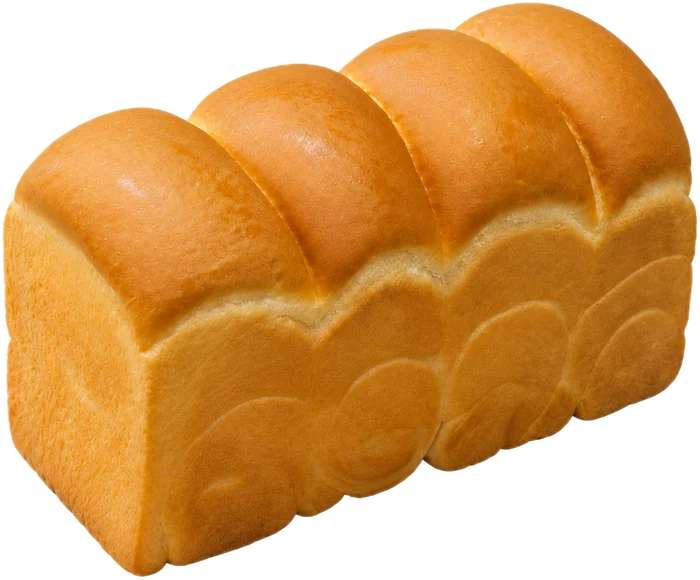
Bake the loaf with a lid on the tin and you get a square slice. Bake it without one and you get a domed top.
| Shape | Japanese name | How it is baked | What you get |
|---|---|---|---|
| Square | kaku shokupan (角食パン) | A lid goes on the tin, so the dough rises into the corners | Flat top, square slices, a closer, moister crumb. The sandwich loaf |
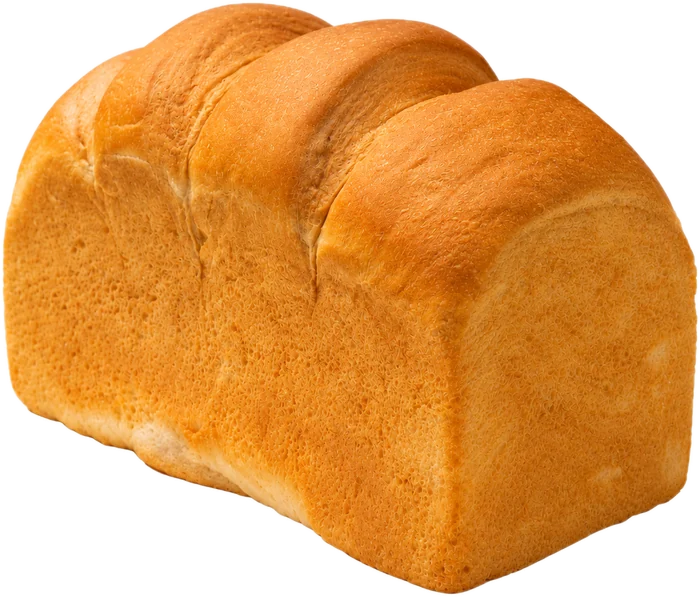
| Domed | yama shokupan (山型食パン), "mountain" | Open tin, so the dough rises freely | A rounded top, often in two or three humps, a lighter crumb. The toast loaf |
In English the square loaf is often called a Pullman loaf, after the Pullman railway cars, whose small kitchens used it because square loaves pack tightly. Neither shape is more correct: square tends to go to sandos, domed to toast.
How is shokupan different from pav and white bread?
All three are soft, white and yeasted. Shokupan is the richest and tallest, and the one meant to be eaten on its own.
| Shokupan | Pav | Packaged sliced white | |
|---|---|---|---|
| Shape | Tall loaf, square or domed | Small rolls baked pressed together | Rectangular loaf, sliced thin |
| Crumb | Fine, moist, tears in sheets | Soft and light, pulls apart in chunks | Soft, compresses easily |
| Best for | Thick toast, sandos, eating plain | Pav bhaji, vada pav, misal | Everyday sandwiches |
Pav exists to carry bhaji. Shokupan exists to be eaten plain, or to hold cream and fruit without collapsing. The full side-by-side is in shokupan vs white bread vs pav.
Where did shokupan come from?
Bread reached Japan with Portuguese traders in the sixteenth century, and the Japanese loaf draws on the British tin loaf and the French pain de mie. It became everyday food after the Second World War, when school lunches were built on bread and skimmed milk; rice did not return to them until 1976. Japanese bakers spent the following decades making the loaf softer, moister and a little sweeter.
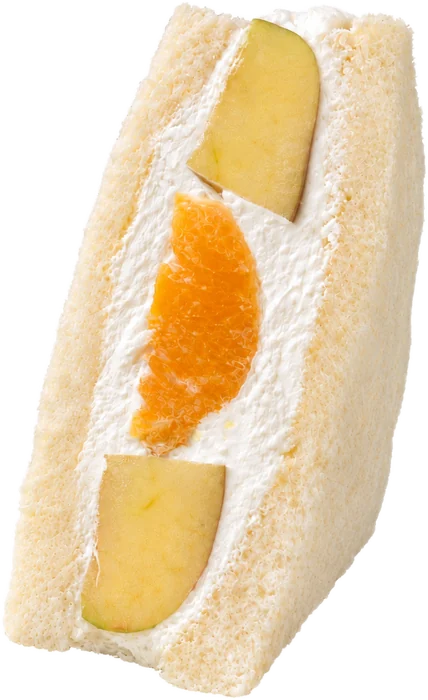
It is now the base for much of what a Japanese bakery sells. Cut the crusts off, add cream and fruit, and it becomes a fruit sando. The rest of the shelf is in types of Japanese bread.
Is shokupan made with egg?
Many shokupan recipes include egg, but not all do, and ours never does. Many milk-bread and Hokkaido-style recipes add egg for richness, so if it matters, ask, or buy from a bakery that is eggless by rule. The longer answer is in is shokupan eggless?
Egg usually gives a milk loaf its softness and structure, so removing it means finding that softness somewhere else. We found it in a wetter dough and a longer, cooler ferment.
Tear it, don't slice it. It gives up in soft sheets.
— Fillo Bakes
What shokupan does Fillo bake?
Four loaves, all eggless and vegetarian, all containing wheat and dairy, and all available whole or sliced.
| Loaf | What it is | Price | Choose it for |
|---|---|---|---|
| Milk Shokupan | The plain milk loaf | ₹200 | Toast, sandos, a first loaf |
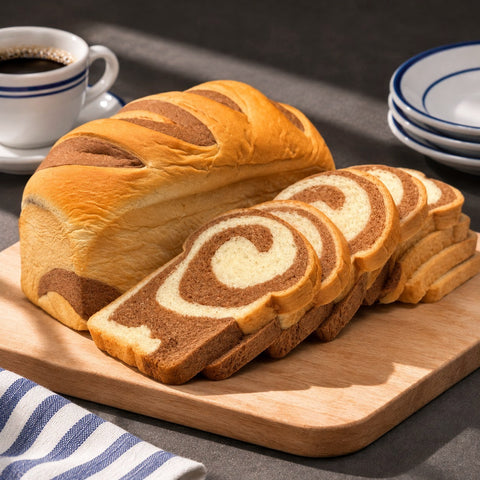
| Marble Shokupan | Chocolate dough folded through milk shokupan | ₹200 | A pattern in every slice |
| Chocolate Shokupan | Chocolate through the whole dough | ₹250 | Dark all the way through |
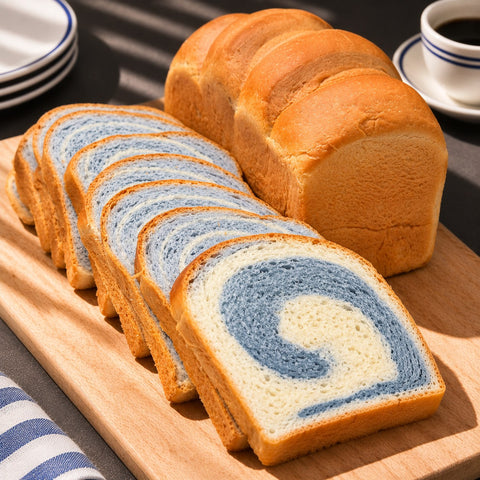
| Blue Pea Shokupan | Milk bread with butterfly pea flower | ₹250 | Colour, and children |
One rule for all four: cut it thick, about 2 cm, never sandwich-thin.
Milk Shokupan (ミルク食パン), ₹200
Soft Japanese milk bread, and the one to start with. It has a fine, pillowy crumb, a light sweetness, and a square slice that holds its shape under a toaster or a sando filling. Every Fillo fruit sando is built on it.
"The loaf the bakery started with, and the one that took longest to get right without eggs." — Fillo Bakes
Pairs with: Fruit Sando, Orchard Melt, Custard Anpan.
Marble Shokupan (マーブル食パン), ₹200
The milk shokupan with a chocolate dough folded through it, so every slice comes out with its own pattern. Sweet enough to eat plain, plain enough to toast. Good with coffee and nothing else.
Pairs with: Milk Shokupan, Choco-la, Mawa Melt.
Chocolate Shokupan (チョコ食パン), ₹250
Chocolate worked through the whole dough rather than swirled, so the loaf is dark right the way through. Same soft crumb, less sweetness than a cake, and it toasts well. If you want the pattern instead, take the Marble; the two are compared in marble vs chocolate shokupan.
Pairs with: Marble Shokupan, Banana Biscoff Pan, Milk Shokupan.
Blue Pea Shokupan (食パン), ₹250
A naturally blue, soft milk bread made with butterfly pea flower. No artificial colour: the blue comes from the flower, not from a bottle. It is the same shokupan crumb underneath, so it behaves like any other loaf on a toaster or under jam. Children tend to ask for this one twice. More in the blue pea bread story.
Pairs with: Milk Shokupan, Strawberry Cream, Orchard Melt.
For toast, sandos and French toast, read how to eat shokupan; once it is home, how to store shokupan. All four loaves are also on the shokupan page.
Sources
- Shokupan, Wikipedia
- 食パン (shokupan), Japanese Wikipedia
- Pullman loaf, Wikipedia
- School lunch in Japan, Wikipedia
- Clitoria ternatea (butterfly pea), Wikipedia
Questions
What does shokupan taste like?
Shokupan tastes mildly milky and faintly sweet, with very little crust flavour. The texture does most of the work: soft, moist and springy enough to tear in sheets.
Is shokupan the same as Japanese milk bread?
Yes, shokupan is the Japanese name for what English speakers usually call Japanese milk bread. Hokkaido milk bread is a name used for the same style, often made with more milk or cream.
What is the difference between shokupan and brioche?
Brioche is much richer, with a large share of butter and eggs, while shokupan is lighter and gets its softness mainly from milk and a soft dough. Brioche tastes of butter; shokupan tastes of milk.
Which Fillo shokupan should I try first?
The Milk Shokupan, ₹200, is the one to try first. It is the loaf the bakery started with and the bread in every Fillo fruit sando; the Marble, Chocolate and Blue Pea loaves are built on the same soft crumb.
Is Fillo's shokupan eggless?
Yes, every Fillo shokupan is eggless, and so is everything else Fillo bakes. The loaves are vegetarian but not vegan: they contain wheat (gluten), milk and butter.
Is the Blue Pea Shokupan artificially coloured?
No, the Blue Pea Shokupan has no artificial colour. The blue comes from butterfly pea flower.
How do I get Fillo shokupan in Bengaluru?
Order on fillobakes.com and pick a two-hour delivery slot; order about an hour ahead and it can come the same day. Every loaf comes whole or sliced. Delivery is free within 2 km or on orders over ₹500, and covers Bengaluru only.